Quick Answer: Jozani Forest is Zanzibar’s only national park, about 35 km southeast of Stone Town. It protects the endangered Zanzibar red colobus, a monkey found nowhere else on earth. A guided visit takes 1.5–2 hours inside the park and includes a forest trail and a mangrove boardwalk. Go before 10am, when the monkeys are most active.
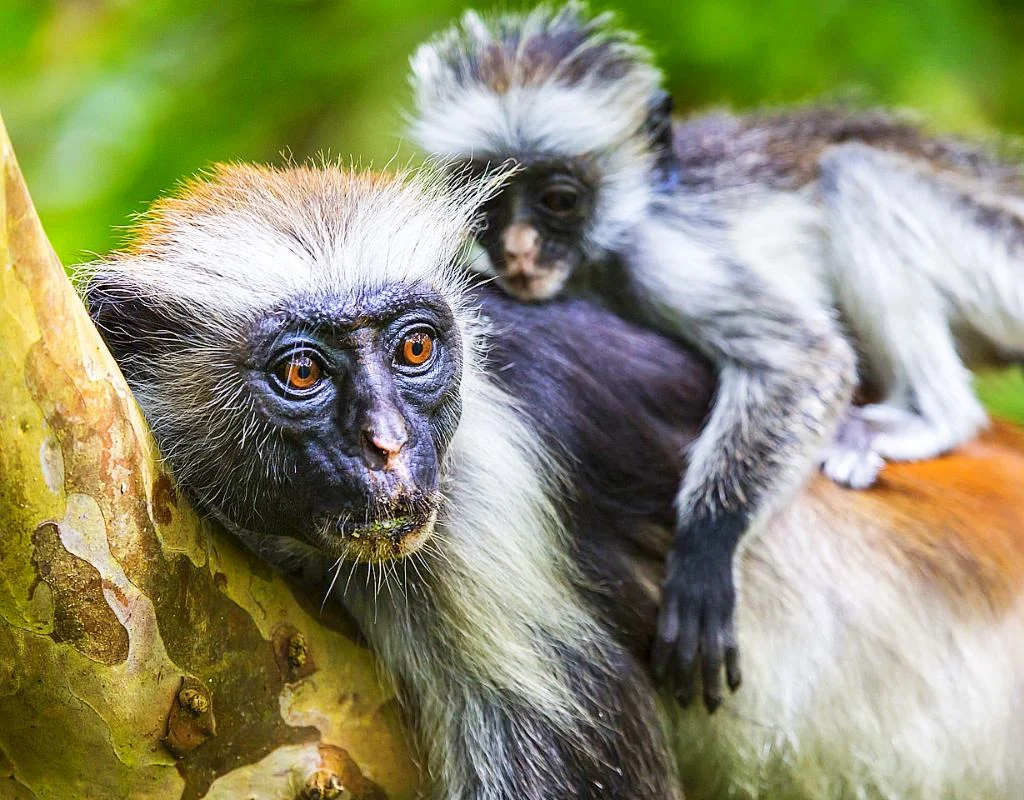
Most visitors arrive at Jozani expecting a quick monkey photo stop on the way to Paje. Then a troop of red colobus drops into the trees a few metres above them, an infant clinging to its mother’s belly, and nobody wants to get back in the car.
I have been bringing guests to Jozani Forest in Zanzibar since 2016, and it is still the visit people talk about at dinner. It is short, shaded and easy on the legs, and it is the only place in the world where you can watch this monkey in the wild.
This guide covers what you actually see on a visit, the best time of day to go (it matters more than the month), how the ranger walk and mangrove boardwalk work, what it costs, and which combinations make the most of the drive. I’ll also be honest about who might find it underwhelming, so you can decide whether it deserves a morning of your trip.
What Is Jozani Forest?
Jozani Forest is the heart of Jozani–Chwaka Bay National Park, a protected area of roughly 50 km² in the south-central part of Unguja, Zanzibar’s main island. It is the island’s only national park and the last large stretch of indigenous groundwater forest left on Zanzibar.
Where is Jozani Forest and how far is it?
The park gate sits right on the main road from Stone Town to the east-coast beaches, about 35 km from Stone Town. That location is what makes it so easy to visit:
- From Stone Town or the west coast: about 40–60 minutes by road
- From Paje, Jambiani, Bwejuu or Michamvi: about 15–25 minutes
- From Nungwi or Kendwa in the north: roughly 1.5–2 hours each way, so most northern guests pair it with something else in the south
Why is Jozani a national park?
The forest was first protected as a reserve in 1960 and became Zanzibar’s first national park in 2004, created largely to save the red colobus. According to Mongabay’s reporting on Zanzibar’s red colobus, part of the park’s entrance revenue goes to surrounding community organisations, which is one reason local villages now see the monkeys as worth protecting rather than as crop pests.
What Will You See in Jozani Forest?
You will see three different habitats in one short visit: a grove where the red colobus feed, a shaded groundwater forest trail, and a tidal mangrove swamp crossed by a raised boardwalk. The monkeys are the headline, but the mangroves are what most rushed groups miss.
Are the red colobus monkeys guaranteed?
Nothing with wild animals is guaranteed, but Jozani is about as reliable as wildlife viewing gets. The troops near the entrance are fully habituated to people and move between the forest edge and nearby farm trees every day. In my experience nearly every group sees them, usually from a few metres away.
The Zanzibar red colobus (Piliocolobus kirkii) is listed as Endangered. The Wildlife Conservation Society’s Tanzania programme carried out the first full census of the species and estimated a total population of about 5,862 animals, spread between Jozani and a handful of smaller forest patches.
A few things guests love learning from our rangers:
- The colours: a deep red back, a black-and-white face framed by a white “crown” of fur, and pale undersides. Babies are born dark and change colour as they grow.
- The charcoal habit: red colobus here have been recorded eating charcoal, which researchers believe helps them cope with toxins in the leaves they eat.
- The social life: troops of a dozen or more feed, groom and squabble constantly, so there is always something happening.
What else lives in the forest?
On the ranger-led nature trail you walk under mahogany and fig trees growing out of a forest floor that floods in the rains. Look and listen for:
- Sykes’ monkeys, which are darker, shyer and often watching from higher branches
- Bush babies and the tiny Aders’ duiker, an antelope you are lucky to glimpse
- Birds such as turacos, sunbirds and kingfishers
- Medicinal plants that Swahili villages still use, which your ranger will point out and explain
What is the Jozani mangrove boardwalk?
Across the road from the main forest, a raised timber boardwalk loops through the Pete–Jozani mangroves. The tide moves in and out under your feet, fiddler crabs work the mud between the roots, and the air is noticeably cooler. It takes about 20–30 minutes, it is included in your ticket, and it is quiet because many groups skip it. Tell your guide you want to walk it.
What Is a Jozani Forest Tour Like?
A typical Jozani visit is a half-day trip of about 3–4 hours door to door from Stone Town, with 1.5–2 hours inside the park. The walking is flat, mostly shaded and suitable for children and older travellers.
How does the visit run, step by step?
Here is how a morning visit usually goes with our team. Your ranger may change the order depending on where the troops are feeding that day.
Who leads the walk?
Every group inside the park walks with an official park ranger, and with Rama Zanzibar you also have your own local guide for the day. The ranger knows the forest and the rules; your guide handles timing, translation, photos and anything else you want to add to the day. You don’t need to arrange the ranger separately.
Is Jozani suitable for children and older travellers?
Yes. The trails are flat and short, there are no climbs, and the boardwalk has railings. Children usually love the monkeys most of all. If anyone in your group has limited mobility, tell us when you book: the monkey grove is close to the road, so a shorter visit focused on the colobus is easy to arrange.
When Is the Best Time to Visit Jozani Forest?
The best time to visit Jozani is early morning, ideally arriving before 10am, in any month of the year. The time of day matters far more than the season, because the colobus feed actively in the morning and rest high in the canopy through the heat of the day.
Does the season matter?
Only a little. The forest canopy keeps you shaded and mostly dry, so Jozani works year-round. The dry months, June to October and December to February, give the firmest trails. The long rains of April and May leave the forest at its greenest but the paths can be muddy, so wear shoes you don’t mind getting dirty. Our full guide to the best time to visit Zanzibar breaks down the island’s weather month by month if you are still choosing travel dates.
Why go early rather than in the afternoon?
Two reasons. First, the monkeys: once they settle into their midday rest, you see more tails and branches than faces. Second, the crowds: tour minibuses heading to the east coast tend to stop at Jozani from late morning, and the monkey grove gets busy. An early start gives you the troops and the trails almost to yourselves.
How Much Does a Jozani Forest Tour Cost?
Our Jozani Forest Tour costs $25–$50 per person depending on group size, and the price includes the park entrance fee, your local guide, the ranger walk, the mangrove boardwalk and bottled water. Current group rates are:
- 1 person: $50
- 2–3 people: $30 per person
- 4–6 people: $27 per person
- 7–14 people: $25 per person
- 15+ people: ask us for a group rate
Hotel pickup and return can be added for an extra cost depending on where you’re staying. If you’re only arranging a ride, our Zanzibar transfer service lists island-wide rates per vehicle.
Tip: bring a little cash in Tanzanian shillings or small US dollar notes for drinks, the small shop near the gate, or a tip for your ranger if you enjoyed the walk.
What Should You Combine With Jozani Forest?
Jozani is short, so most of our guests combine it with a second stop on the same road. Because the park sits halfway between Stone Town and the east coast, you can add almost anything in the south without long extra driving.
My personal favourite for first-time visitors is the Spice Farm & Jozani Forest Combo Tour: you smell and taste cloves and cinnamon in the morning, meet the monkeys, and are back at your hotel by mid-afternoon. If you want to know more about the first half of that day, read our spice farm guide.
If you prefer water after the forest walk, the Jozani Forest & Cave Swimming Combo Tour ends with a freshwater swim in a limestone cave, and the Jozani Forest & Blue Lagoon Combo Tour adds shallow, beginner-friendly snorkeling off the Michamvi coast. Families with younger children often add the nearby Zanzibar Butterfly Centre, a few minutes up the road.
What Do Locals Want You to Know Before Visiting Jozani?
The most important thing is that these are wild monkeys, and the way visitors behave around them decides whether they stay healthy and relaxed. The rules are simple, and our guides will remind you on the day.
How should you behave around the red colobus?
- Keep a few metres back and let the monkeys come closer if they choose. Don’t follow a monkey that is moving away.
- Never feed them, not even fruit. Human food makes them sick and teaches them to approach cars on the road.
- No flash photography, and keep your voice low.
- Don’t touch, even if one lands right beside you. They carry and can catch diseases from people.
- Stay home if you’re unwell. Primates can catch human colds and flu.
What should you wear and bring?
- Closed shoes or sturdy sandals, especially in April–May
- Light, breathable clothes; long trousers help against mosquitoes in the mangroves
- Insect repellent, a hat and a refillable water bottle
- A camera with a moderate zoom; you rarely need more than 3x
Is Jozani Forest worth it?
For most travellers, yes. It is cheap, short, shaded and easy to reach, and you are seeing an animal you cannot see anywhere else on the planet. The only people I’d steer elsewhere are travellers who have just come from a mainland safari and only want big game, or anyone who can only go at midday in peak season and doesn’t want company at the monkey grove. Even then, the mangrove boardwalk alone is a lovely, quiet half hour.
Frequently Asked Questions About Jozani Forest
How long do you need at Jozani Forest?
Plan on 1.5–2 hours inside the park: about 30–45 minutes with the red colobus, 30–40 minutes on the forest trail and 20–30 minutes on the mangrove boardwalk. With the drive from Stone Town or the west coast, the whole trip takes about 3–4 hours. From east-coast hotels in Paje or Jambiani, you can comfortably do it in a morning and be back at the beach before lunch.
Can you visit Jozani Forest without a guide?
You can buy a ticket at the gate, but every group walks inside the park with an official ranger, so you are never fully on your own. Going with a local operator mainly saves you the transport and timing. We plan the departure so you arrive while the monkeys are feeding, add the boardwalk if a ranger tries to skip it, and combine the forest with a second stop so the drive is worth it.
Are the red colobus monkeys dangerous?
No. Zanzibar red colobus eat leaves, are relaxed around people and are not aggressive. Problems only start when visitors feed or touch them, which is why rangers keep groups a few metres back. Keep food packed away, don’t reach for infants, and you’ll have no issues. The bigger risk is to the monkeys, which can catch human illnesses.
Is Jozani Forest open every day?
Yes, Jozani is open every day of the year, including weekends and public holidays. Visits run during daylight hours. Because the monkeys are most active early, we schedule most departures so groups enter the park in the first part of the morning. Afternoon visits are possible, but the troops are usually resting higher in the trees by then.
Can you see red colobus monkeys anywhere else in Zanzibar?
The species lives only on Unguja, Zanzibar’s main island. Small groups survive in other forest patches and farmland in the south and around Uzi Island, but Jozani is by far the most reliable, best-protected and easiest place to see them, with rangers who know where the troops are each day. For visitors, Jozani is effectively the only practical option.
What is the difference between Jozani Forest and the Jozani–Chwaka Bay National Park?
They are the same place. “Jozani Forest” is the name most people use for the forest section that visitors walk in. The full national park also includes the mangroves and the wider Chwaka Bay area to the north. Your ticket covers the forest trail, the colobus area and the Pete–Jozani mangrove boardwalk.
Is Jozani Forest good for photography?
Very good, as long as you go early. The colobus sit close enough for a phone camera, and morning light through the canopy is soft. Turn off your flash, shoot at a fast shutter speed because the monkeys move quickly, and be patient: the best shots usually come when a troop settles to groom. The mangrove boardwalk is lovely for wide shots of the roots and channels.
Final Thoughts
Jozani Forest in Zanzibar is one of the easiest, best-value half days on the island, and it is the only place on earth to see the red colobus in the wild.
- Go early, before about 10am, for active monkeys and quiet trails
- Walk all three parts: the colobus grove, the forest trail and the mangrove boardwalk
- Pair it with a spice farm, a cave swim or the Blue Lagoon so the drive does double duty
- Keep your distance and never feed the monkeys
Our guides have been walking these trails with guests for years, and we time every visit around the troops rather than the tour-bus rush. If you’d like us to plan your Jozani morning, or build it into a longer day, send us a message on WhatsApp at +255 773 315 736 and tell us where you’re staying.