Quick Answer: A Zanzibar village tour is a guided half-day walk through a working Swahili fishing or farming village. Depending on the village and the tide, you might see dhows being built by hand, a morning fish auction, women farming seaweed, a Qur’an school and local crafts. Tours take 3–4 hours, suit all ages and cost about $50–$80 per person.
“Is it going to feel like a zoo?” That is the question I hear most from guests thinking about a village tour, and it is a fair one. Nobody wants to walk through someone’s home taking photos like they are an exhibit.
A good Zanzibar village tour is the opposite of that. You are walking through a place where people work, cook, pray and argue about football, with someone from the island explaining what you are looking at and introducing you to the people doing it. I grew up with these mornings: the fish auction noise, the smell of coffee on the baraza, the women walking out at low tide to their seaweed lines.
In this guide I’ll tell you honestly what you will see, how a visit runs, what it costs, how to behave so you are welcome, and who will love it (and who probably won’t). By the end you’ll know whether a village morning belongs in your Zanzibar plans.
What Is a Zanzibar Village Tour?
A Zanzibar village tour is a guided walk through a real coastal or inland community, led by a local guide who knows the families and the routines there. It is not a staged cultural show: what you see depends on the day, the tide and what people are working on.
Which village will you visit?
We run our village tours in several communities around the island, from northern fishing villages to quiet farming villages inland and in the south. Rather than giving you a menu, we choose the village for you based on where you are staying (so you’re not spending half the morning in a car), what you’re most curious about, and the tide and day of the week. If you’re excited by boats and fishing, we’ll head somewhere with a busy beach and dhow builders; if you’d rather see farms and crafts, we’ll go inland.
How is it different from Maasai World?
Many visitors confuse the two. A village tour shows you everyday Swahili Zanzibari life. Maasai World is a cultural village run by Maasai families from mainland Tanzania, with dancing, archery and beadwork. Both are worth doing, but they show different cultures. If you want to understand the island itself, start with the village tour.
What Will You See on a Village Tour?
You will see whichever parts of daily life are happening that morning. Most visits include several of the moments below, and your guide will build the walk around what’s going on.
What happens at the fish auction?
In fishing villages, boats come back from the night or early-morning trip and the catch is sold on the beach by auction, with buyers shouting bids in Swahili. It is loud, quick and fascinating. With your guide’s help you can even bid on a fish yourself and have it grilled for lunch. Timing depends on the tide and the boats, so we plan the start time around it.
Why do so many women farm seaweed?
Seaweed farming is one of the most important sources of income for coastal women in Zanzibar. Researchers estimate that around 15,000–20,000 people farm seaweed on the islands, about 90% of them women, according to a 2020 study of seaweed farming and climate change in Zanzibar. At low tide you’ll see them tying seaweed to lines between wooden stakes in the shallows. If the tide and the farmers allow it, your guide may arrange for you to wade out and see how it’s done.
Will you visit someone’s home?
Usually, yes. A family will welcome you to sit on the baraza, the stone bench outside Swahili houses where neighbours gather, and offer Zanzibari coffee or fresh fruit. This is a real home, so it is short and relaxed, and it is the part guests remember most. Families who host are paid through the tour.
How Does a Zanzibar Village Tour Run?
A village tour is a half-day experience of about 3–4 hours including transport. The walking is gentle and on flat village paths, and the pace is slow on purpose.
What does a typical morning look like?
- Pickup from your hotel and a drive through farmland and coconut plantations, with your guide explaining what you pass.
- Welcome to the village, where you meet your host and hear how the community lives and earns.
- A walk on foot past homes, the mosque, the madrasa and the beach or farm plots.
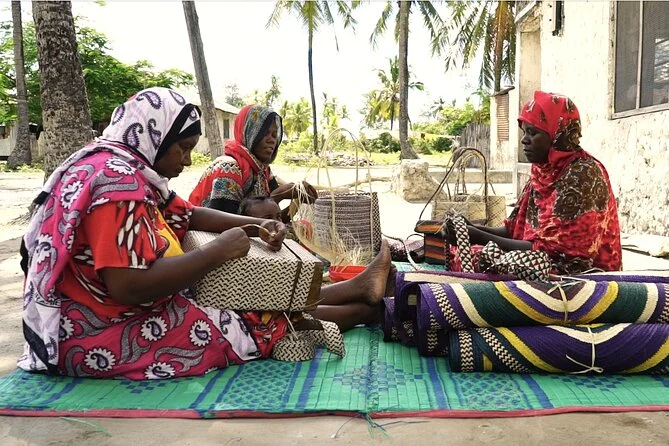
- Working life: the fish market, dhow builders, seaweed farms or crafts such as rope and basket making.
- Coffee or fruit with a family, and time to ask questions.
- Optional lunch of local food, then the drive back.
Is lunch included?
A traditional lunch is available for an extra cost, and I recommend it. Simple Swahili cooking in a village (rice, fish or chicken in coconut sauce, chapati, fruit) is often the best meal guests have on the island. Tell us when you book so the family can prepare.
How Much Does a Village Tour Cost?
Our Zanzibar Village Tour costs $50–$80 per person depending on group size. The price includes your local guide, all activity fees, bottled water and government fees. Current rates:
- 1 person: $80
- 2–3 people: $70 per person
- 4–6 people: $60 per person
- 7–14 people: $50 per person
- 15+ people: ask us for a group rate
Hotel transfers and the traditional lunch are extra. If you’d like to compare village tours with other island trips, our guide to how much Zanzibar tours cost lays out typical price ranges for every type of tour.
Can you combine a village tour with something else?
Yes, and many guests do. The Village Tour & Spice Farm Combo Tour pairs village life with the plantations that made Zanzibar famous. If you want more energy, the Quad Bike & Village Tour Combo has you riding dirt tracks through rice fields before parking up and walking into the village. And if you’re staying near Nungwi, you can add a swim with rescued sea turtles at the Nungwi turtle aquarium on the same day.
Is a Village Tour Respectful, and How Do You Get It Right?
A village tour is respectful when the community is paid fairly, the visit is small and unhurried, and visitors behave as guests rather than spectators. We work with the same families and village contacts again and again, and our groups are small. The rest is up to you, and it is easy.
What should you wear?
Zanzibar is a Muslim society, and villages are more conservative than resorts. Cover your shoulders and knees: a loose T-shirt and long shorts, trousers or a skirt are perfect. The UK government’s travel advice for Tanzania notes that shorts and sleeveless tops away from resorts may cause offence. Swimwear stays at the beach. Our guide to what to wear in Zanzibar covers every situation, from village walks to boat days.
A few Swahili words that open doors
- Jambo / Mambo – hello (casual)
- Shikamoo – a respectful greeting for elders; they’ll reply “marahaba”
- Asante (sana) – thank you (very much)
- Karibu – welcome (you’ll hear this a lot)
- Pole pole – slowly, slowly: the village rhythm
Who Will Enjoy a Village Tour Most?
Village tours suit curious travellers who enjoy people, conversation and everyday life more than sights and photo spots. Families, couples, solo travellers and older guests all love it, and children often make friends with local kids within minutes.
Who might not enjoy it?
If you want big scenery or adrenaline, a village morning may feel slow; pair it with a quad bike ride or choose a boat trip instead. It is also not the place for drone photography or a fashion shoot. And if you’ll only be in Zanzibar for two days, I’d usually put Stone Town and Prison Island first and save the village for a longer trip.
What do guests say surprises them?
Almost everyone says the same two things: how welcome they felt, and how hard people work. The dhow carpenter shaping a hull with hand tools, the women out in the shallows at 7am, the boys hauling nets: it changes the way people see the island, and the beaches, for the rest of their stay.
Frequently Asked Questions About Zanzibar Village Tours
How long does a Zanzibar village tour take?
Most village tours take about 3–4 hours including hotel pickup and return, with roughly 2 hours in the village itself. If you add the traditional lunch, plan on 4–5 hours. Because it’s a half-day, it fits easily before an afternoon at the beach or a sunset dhow cruise. Combo tours with a spice farm or quad biking run longer, typically most of the day.
Is it safe to visit a local village in Zanzibar?
Yes. Zanzibari villages are friendly, and visitors walking with a local guide are welcomed. Our guides know the families and community leaders in the villages we visit, which also means you’re expected and introduced properly. Use the same common sense you would anywhere: keep valuables out of sight, carry small cash and stay with your guide.
Can you take photos on a village tour?
Yes, of the village, the beach, the boats and the landscape. For photos of people, always ask first, especially women and children, and accept a “no” with a smile. Many people are happy to pose once you’ve greeted them and chatted a little. Your guide will ask for you in Swahili. Never photograph inside homes or the mosque without permission.
Should you bring gifts for children?
Please don’t hand out sweets, money or pens directly to children. It encourages begging and can cause problems for families and schools. If you want to help, ask your guide about giving school supplies or a donation to the madrasa or village school, so it goes through the community. Buying crafts or eating a lunch cooked by a local family also puts money directly into the village.
Is the village tour suitable for children?
Very. The walking is easy and flat, there’s lots to look at, and local children are usually delighted to meet visiting kids. Families often find it the most meaningful morning of their trip. Bring water, a hat and sunscreen, and let us know your children’s ages when you book so we pick a village and pace that suits them.
What is the best time of day for a village tour?
Mornings are best. The village is at its liveliest, the fish auction happens early, and it’s cooler for walking. Seaweed farming happens at low tide, which moves every day, so we check the tide tables when we plan your start time. Afternoon tours are possible and quieter, which some guests prefer.
Can a village tour be private?
Yes. All our village tours can be run privately for your group, and the price per person falls as your group grows. Private tours let us adjust the pace and focus, for example more time with the dhow builders or the seaweed farmers, depending on what you enjoy.
Final Thoughts
A Zanzibar village tour is the easiest way to see the island as it really lives, beyond the resorts and the postcards.
- Expect real working life: fishing, farming, building and cooking, not a performance
- Go in the morning, dress modestly and greet people before you photograph them
- Add the local lunch, or pair the village with a spice farm or quad ride
- Let us choose the village around your hotel and interests
Our guides are from these communities, and that is what makes the welcome genuine. If you’d like us to plan your village morning, message us on WhatsApp at +255 773 315 736 with your hotel and travel dates.